It is past midnight in Faisalabad, and a developer is still at her desk, not because a deadline in Pakistan demands it, but because a client in Toronto is just starting their day. She has never left the country. She has never needed to. Her laptop is the only border crossing she requires, and it opens every time she logs on.
That single client relationship is one line in a much larger ledger. Software houses, BPOs, and export companies, alongside independent freelancers, together earned Pakistan US$4.6 billion in IT and IT-enabled services exports in FY2025-26, the largest figure the sector has ever posted, up 20.6 percent from US$3.8 billion the year before. In June alone, technology exports brought in US$416 million, nearly 23 percent more than the same month last year. These are not projections or targets. They are what Pakistani companies and individuals, working from Pakistani soil, earned from the world.
What makes this money different from most of what Pakistan has exported before is that almost nothing had to be imported to earn it. With an 85 percent trade surplus, the technology sector generates foreign exchange without importing the raw materials to produce it. No ore, no cotton, no commodity whose value is set somewhere else. A developer writes code. A designer delivers a brand. A consultant solves a problem. The value is created here. It stays here. And it compounds, because the person who earned it is still here, still working, still getting better.
This is what economic sovereignty looks like when it is built on people rather than resources.
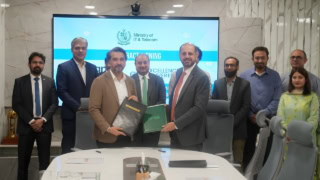
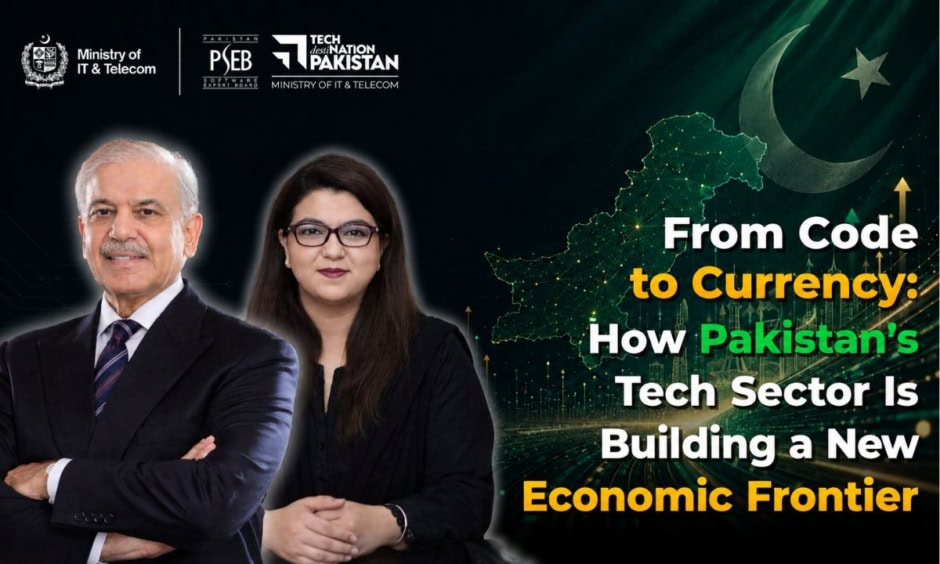
This progress is not accidental. Prime Minister Muhammad Shehbaz Sharif made technology exports a national priority, holding high-level review meetings that cleared bottlenecks and set a bold marker: a US$25 billion digital economy by 2030. Federal Minister Shaza Fatima Khawaja, at the Ministry of IT and Telecommunication, turned that priority into conditions businesses can actually work with. The 0.25 percent final tax regime was extended to 2029. Foreign currency retention was raised to 50 percent. Cross-border payments got easier for exporters and freelancers alike, and new incentives are pulling investment into AI infrastructure.
The government also placed a bet on what comes after software services. A National AI Policy is now in place, backed by a planned US$1 billion investment in AI by 2030. Nationwide fibre expansion and a 5G rollout are being built out to strengthen the country’s digital backbone, and the Islamabad IT Park is set to begin operations soon, alongside a wider expansion of software technology parks. Underpinning all of it is people: government-supported programmes have now delivered over 1 million trainings, across advanced digital disciplines, feeding skilled talent into an economy that runs on them.
PSEB’s own programmes are building the pipeline behind these numbers. A two-day national AI training bootcamp reached over 2,000 students in February 2026, delivered with global partners including IBM, Huawei and Google. And a new national semiconductor workforce programme, still in its first year, has already enrolled 475 graduate engineers on the way to a target of training 7,200 professionals for an industry Pakistan has barely entered.
Through Tech Destination Pakistan, PSEB has been taking that talent to the world’s largest technology platforms, opening doors in markets Pakistani companies are only beginning to reach.
Seventy-nine years after independence, Pakistan’s technology sector has stopped asking the world to notice it. What stands today is proof of something larger: a nation that chose to bet on its own people, and watched that bet pay off in dollars earned rather than borrowed. Every line of code written from Lahore, every deal closed from Faisalabad, every export shipped without a single import behind it, is a small act of sovereignty. That is what Pakistan has built. Not by chance, but by choice. And it is only the beginning.