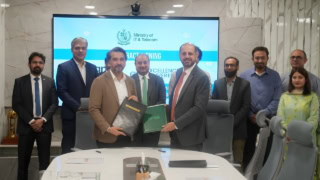
Google, the US-based technology giant, has officially inaugurated its local office in Pakistan. The office was inaugurated on Tuesday during a ceremony held at the Prime Minister’s House in Islamabad. Prime Minister Shehbaz Sharif also met a Google delegation led by Wilson L. White, the company’s global affairs vice president.
Google has now confirmed that it is opening a new office in Karachi as the company expands its presence in Pakistan. Farhan Qureshi, Google’s Cluster Director for Pakistan, confirmed the development while speaking with TechJuice at the launch of Digital Pasban.
Farhan Qureshi said the new Karachi office will initially focus strictly on business matters. This includes Google’s business operations and plans for expanding the company’s presence in Pakistan. However, other issues will continue to be handled from Singapore for now. This includes matters such as ad exchange concerns, complaints, and other related operations.
Farhan Qureshi told TechJuice that the situation could change in the future. If things go as planned, Google could eventually handle these issues and related dealings from Pakistan.
The comments provide a clearer picture of Google’s plans for the country. The Karachi office will give the company a direct business presence in Pakistan, while some operational matters will remain under its Singapore setup for the time being.
Google Launches Digital Pasban in Pakistan
Google also launched Digital Pasban, its first initiative under this new push, at the Safe Raho with Google event. The program aims to help Pakistani families use the internet more safely. Digital Pasban will target 200,000 households across Pakistan. It will provide localized Urdu toolkits, instructional videos, and hands-on training for parents, guardians, and children.
The initiative brings together Google, the Pakistan Telecommunication Authority (PTA), Tech Valley, Beaconhouse School System, Jazz World, and HUM Network. It also has support from the Ministry of Information Technology and Telecommunication, the Ministry of Federal Education and Professional Training, and the Ministry of Interprovincial Coordination.
Digital Pasban focuses on four main areas of online safety and digital literacy. These include Google Family Link, YouTube safety controls, Be Internet Awesome, and Gemini.
Family Link allows parents to manage screen time, approve apps, filter content, and locate devices. Google is also expanding YouTube’s parental controls to give families more control over children’s viewing habits.
A new YouTube feature allows parents to set a daily limit for Shorts. Parents can even set that limit to zero when children need to focus on school or studying.
Google’s Be Internet Awesome program teaches children aged 7 to 12 about responsible online behavior. Its lessons cover topics such as scams, passwords, privacy, kindness, and reporting problems through the interactive game Interland.
Gemini is also part of the program, with Google positioning the AI assistant as a tool rather than a companion. The company says built-in protections for minors restrict harmful roleplay and inappropriate content.
The initiative also highlights Gemini’s Guided Learning feature. It can help students understand difficult topics by asking questions, explaining problems step by step, and providing visual support instead of simply giving answers.
Google plans to take Digital Pasban into local communities through broadcast media, SMS alerts, social campaigns, and school-based town halls. Parent and guardian safety clinics will also provide hands-on training around common online safety situations.
Alongside the initiative, Google.org is committing $500,000 to expand digital citizenship and AI safety programs across Pakistan. The funding will support local partners and help young people and adults develop safer online habits.
Google says Digital Pasban builds on its existing work in Pakistan. Through Digital Safar, the company has trained more than 300,000 students and 5,000 educators in digital citizenship.
The company has also partnered with Punjab Province to move its Ministry of Education to Google for Education. That partnership brings secure, AI-powered learning tools and safety programs to 1.5 million students.
For Google, the new Karachi office and Digital Pasban represent two different parts of its growing Pakistan strategy. The office will initially focus on business, while Digital Pasban aims to strengthen digital safety and literacy for families across the country.