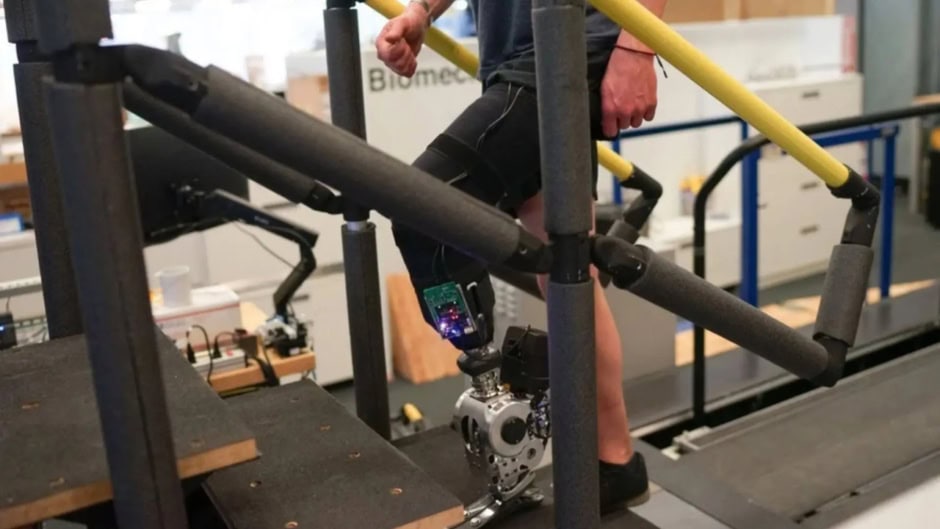
MIT researchers have tested a new method for controlling robotic prosthetic limbs using tiny magnets implanted in muscles. The technology, called magnetomicrometry, offers more accurate control signals than existing systems. The team published its findings in Nature Sensors on October 29, 2026.
The system works through a clever use of magnetic tracking. Specifically, researchers implant pairs of magnets, each about 3 mm in diameter, directly inside muscle tissue. The magnets are made of a neodymium-iron-boron alloy coated with gold and parylene C for biocompatibility.
Sensors on the skin then measure changes in the distance between the magnets. As muscles contract or stretch, the distance shifts. In addition, the system calculates muscle length and velocity from these signals. Furthermore, the signals can reach through tissue up to 6 cm deep.
Three participants with below-knee amputations took part in the study. All three had undergone an agonist-antagonist myoneural interface (AMI) procedure beforehand. This surgical procedure reconnects opposing muscle groups to preserve natural movement signals. Furthermore, each participant received magnetic implants in up to four muscles related to ankle movement.
Participants used their muscle movements to control a cursor on a screen. However, this test focused on the control interface rather than real-world walking. The initial results looked promising. Specifically, magnetomicrometry gave more accurate and stable control signals than surface electrodes.

The new approach also compares favorably against traditional electromyography (EMG). EMG uses skin electrodes to detect electrical activity in muscles. However, the signals are often noisy and vary with skin moisture or fatigue. In contrast, magnetic sensing stays stable because it measures physical distance rather than electrical signals.
The MIT team is now running a larger study to evaluate real-world prosthetic control. Specifically, researchers want to see how well people can control actual robotic ankle-foot prostheses with the magnetic system. However, safety, durability, and everyday performance still need extensive testing.