Global DRAM revenue jumped 369% year-over-year as demand for memory chips continues to rise. AI accelerators and data centers are driving much of this growth. The average selling price (ASP) has also reached $1.9 per gigabit.
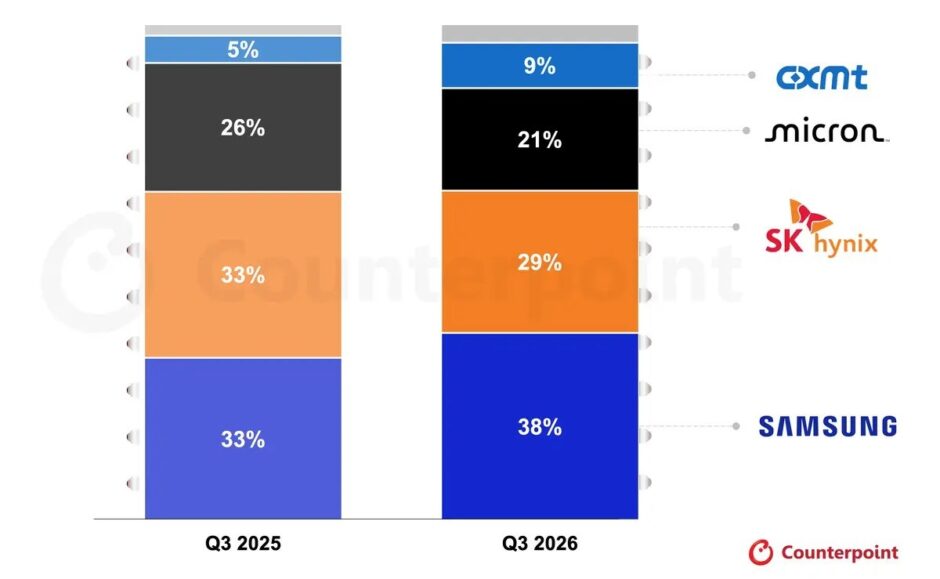
South Korean manufacturers are leading the market, with Samsung holding the largest share. The company controls 38% of global DRAM revenue, followed by SK hynix at 29%. SK hynix recorded revenue growth of more than 40% quarter-over-quarter. However, Samsung currently holds a stronger position.
US-based Micron ranks third with a 21% market share. Meanwhile, China’s CXMT holds fourth place with 9%. Although CXMT grew compared to Q3 last year, its share fell by one percentage point from Q2 this year.
However, the competition is changing in the high-bandwidth memory (HBM) market. SK hynix previously dominated HBM3E sales, according to Counterpoint Research. Now, the market is shifting towards HBM4, where Samsung has taken the lead.
This shift could create challenges for CXMT as well. The Chinese manufacturer plans to begin mass-producing HBM3E next year. As a result, it risks falling behind competitors in the latest memory segment.
However, HBM is not the only memory type benefiting from AI demand. The growing use of agentic AI is also increasing demand for DDR and LPDDR memory. Both technologies are commonly used as system RAM, unlike HBM, which mainly powers AI accelerator cards.
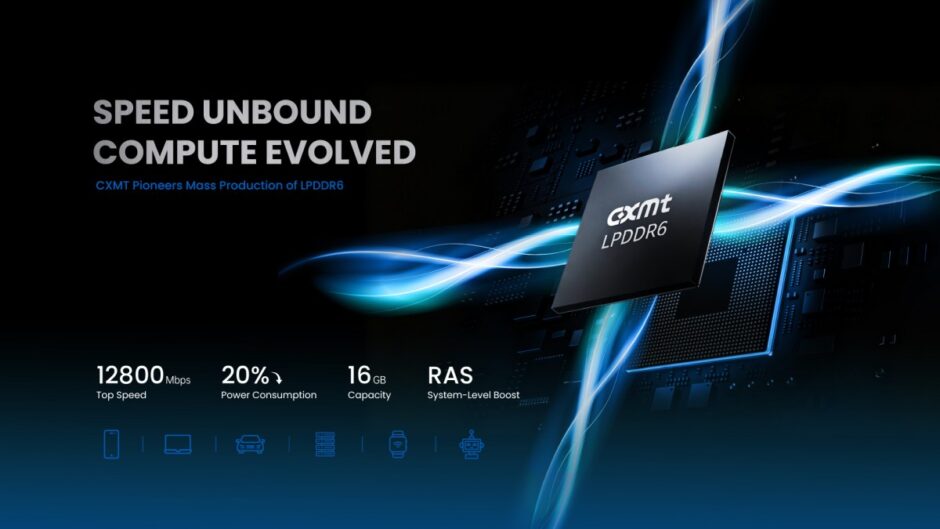
Demand for DDR and LPDDR has increased by 500% and 400% year-over-year, respectively. CXMT has also made progress in this segment. The company became the first manufacturer to begin mass production of LPDDR6 memory.
Interestingly, the Xiaomi 18 Fold uses LPDDR6 in its 16GB RAM variant. However, the 12GB model uses the older LPDDR5X memory standard.
Despite the faster growth in DDR and LPDDR, HBM remains the more profitable DRAM segment. Revenue from HBM sales nearly doubled compared to the same quarter last year. However, DDR and LPDDR revenue is growing at a faster rate.
Memory prices also continued to rise during 2026. However, the pace of increases slowed in Q3 compared to the first half of the year. Prices are still expected to remain high in the near term.
This could create problems for consumers planning PC upgrades. MS Hwang, Research Director at Counterpoint Research, expects memory prices to remain strong next year.
“Memory prices should stay strong next year. HBM prices, which lagged commodity DRAM this year, are now catching up. Long-term agreements (LTAs) are supporting prices and supply will stay tight because major new fabs will not start production until 2028,” Hwang said.
As a result, consumers may have to wait longer for more affordable memory. With major new manufacturing facilities not expected before 2028, supply constraints could continue affecting the market.