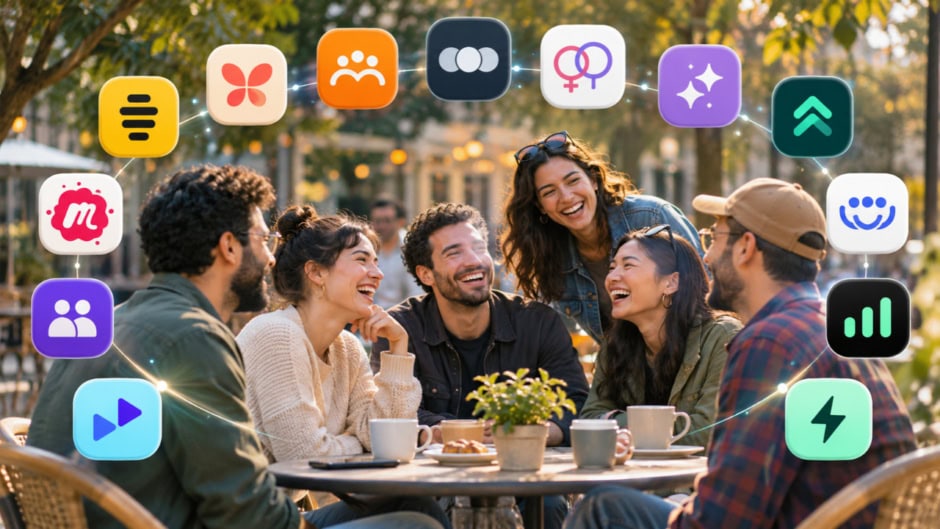
Loneliness has become a public health crisis, as per the US Surgeon General in 2023. Now a growing wave of friendship apps wants to solve the problem.
According to estimates, over a dozen local-focused friendship apps have collectively generated approximately $16 million in US consumer spending this year. Those same apps attracted around 4.3 million downloads.
The demand comes from remote workers who miss office interactions and younger adults building social circles from scratch. Because dating apps normalized finding connections online, the stigma around using an app for friendships has largely disappeared. As a result, these platforms clearly signal that everyone on them wants the same thing: friendship, not romance.
Bumble BFF is among the biggest names in the space. Bumble launched its friend-finding feature in 2016 and spun it into a standalone app in 2023. It recently received a major redesign focused on group meetups and community building. The app remains free on both iOS and Android.
Timeleft takes a different approach entirely. The app organizes weekly dinners with groups of strangers every Wednesday evening at 7:00 PM. Its algorithm matches users based on age, gender, and personality. Participants only learn minor details about their dinner companions the night before, such as occupations and zodiac signs. After dinner, the app directs everyone to a local bar for an after-party.
Meet5 targets users over 40 and recently expanded from Europe to the US. It focuses on group activities like picnics, concerts, and hiking. Despite its recent US launch, the app has already attracted roughly 777,000 American downloads, according to Appfigures.
222 operates exclusively on iOS and matches strangers for public social events like wine bars and comedy clubs. It runs personality tests, then sends invitations to nearby events. A vetting process follows, and selected participants receive notifications on the event day. Users can bring a plus-one. The service charges a $22.22 curation fee.
Several newer apps target specific audiences. Les Amis caters to women and transgender individuals. It uses AI to match users based on interests and encourages participation in local events. Synchrony, which launched in March 2026, serves neurodivergent adults and includes an AI communication tool called Jesse that helps users navigate conversations. Wyzr Friends targets adults 40 and older, including empty nesters and divorced individuals.
Group-based options are also gaining traction. Crowdier lets friend groups of two to five people connect with other groups. Both groups must wave at each other, and a majority in each group must agree before a match goes through. Clyx integrates event data from Ticketmaster and TikTok. It currently operates in Miami and London and plans to expand to New York City and Sao Paulo.
Pie uses an AI-driven quiz to predict compatibility among event attendees. It organizes users into groups of six and adds them to a group chat before the event. Meanwhile, Mmotion blends location tracking with social discovery and currently operates only in New York City. Washed Up focuses specifically on the Los Angeles area and helps users discover local concerts, trivia nights, and comedy shows.
The oldest player remains Meetup, which has connected millions of users since 2002 through interest-based groups and events. It still serves as a foundation for in-person community building.