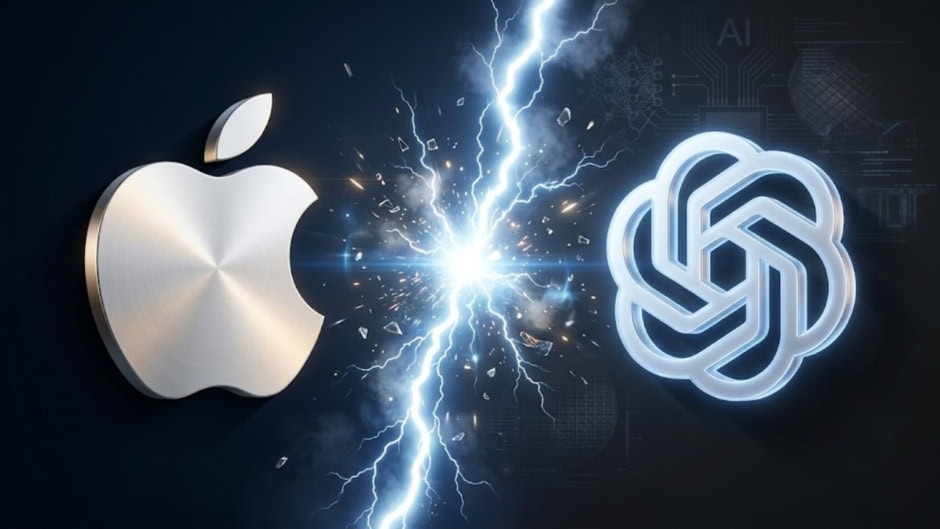
Apple has thrown a wrench into OpenAI’s plans at the most delicate moment imaginable. The iPhone maker’s trade-secret lawsuit arrives just as the ChatGPT creator readies two enormous milestones at once, namely its first hardware device and a long-awaited IPO. So a legal fight now shadows the entire pivot from software into consumer electronics.
As TechJuice reported earlier, OpenAI is building towards a hardware launch while preparing for one of the most closely watched public offerings in tech history. Apple’s legal team entering the picture raises a hard question, namely whether OpenAI can execute that dual strategy while defending itself in court.
OpenAI dominates the language-model space, yet consumer devices demand entirely different muscles, including supply chains, manufacturing partners, retail relationships, and the design polish Apple spent decades perfecting. Reports suggest OpenAI wants devices that put AI directly in users’ hands without leaning on a smartphone, which places it squarely on Apple’s turf.
If Apple’s claims center on intellectual property or proprietary technology, OpenAI could face injunctions that delay product launches indefinitely. Even short of that, the uncertainty alone could unsettle IPO investors, since public markets prize clean balance sheets and minimal litigation far more than venture capitalists do.
OpenAI’s valuation has soared on ChatGPT’s growth and Microsoft’s backing, yet a pitch of “we’re being sued by Apple while entering hardware” tops no banker’s highlight reel. Delaying might be prudent, though employees and early investors have waited years for a payday.
However, for the leadership at OpenAI, this lawsuit presents a tricky dilemma. CEO Sam Altman has been a strong advocate for the idea that hardware is crucial to OpenAI’s goal of making sure AI serves humanity well. Custom devices could offer AI experiences that just can’t be matched by regular smartphones, thanks to tailored chips, unique interfaces, and privacy safeguards designed right from the start. However, chasing this vision while battling Apple in court demands a lot of resources, focus, and a willingness to take risks, which could divert attention from OpenAI’s main business.
Apple has built AI capabilities across its devices, from Siri to on-device processing, so an OpenAI device could threaten the iPhone’s place as the primary AI interface. Given Apple’s history of grinding through patent wars with Samsung and others, OpenAI should expect a long fight, which raises the real question.
With all those plans on the line, will OpenAI try to settle quickly, or did it learn from its recent courtroom victory against Elon Musk that it can endure the cost and embarrassment of a trial? That remains to be seen.