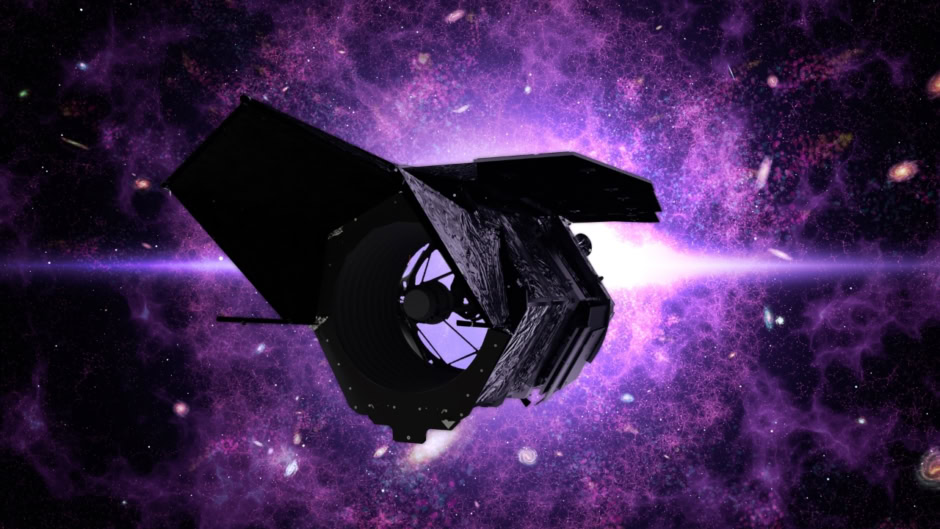
NASA prepares to launch its next flagship space observatory this Sunday from Kennedy Space Center in Florida. The Nancy Grace Roman Space Telescope will investigate some of the universe’s biggest mysteries, including dark energy and dark matter, while also hunting for planets beyond our solar system.
The approximately $4 billion mission launches aboard a SpaceX Falcon Heavy rocket, arriving nine months ahead of its original schedule.
The Roman Space Telescope is the next step after the Hubble Space Telescope, which took to the skies in 1990, and the James Webb Space Telescope, launched in 2021. It brings new capabilities that will build on the incredible discoveries made by these groundbreaking observatories, both of which are still actively exploring the universe.
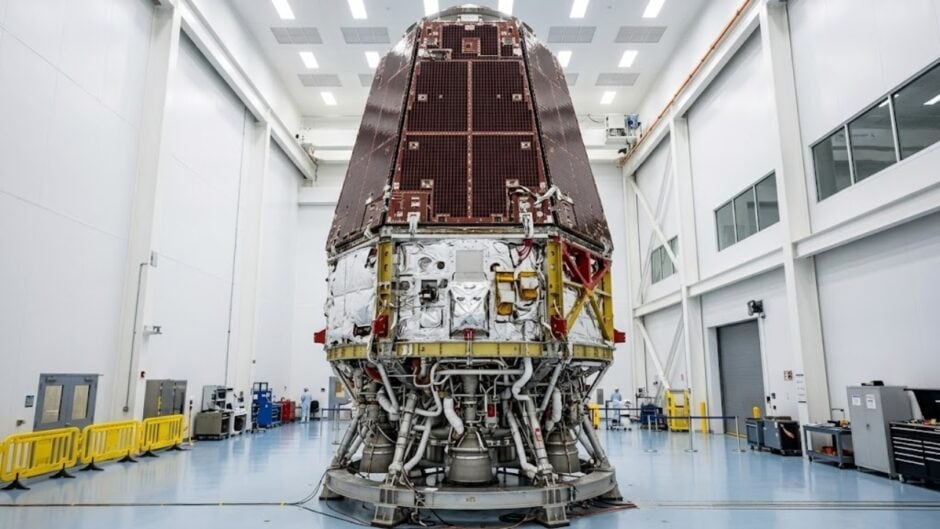
After separating from the rocket, the telescope will travel toward Lagrange Point 2, a location roughly a million miles from Earth and about four times the distance to the moon. Webb currently resides at this same orbital location, while Hubble remains in low-Earth orbit. Because Roman’s mission is planned for five years, though NASA notes the telescope may carry enough fuel for five additional years, the observatory could deliver decades of scientific data.
Roman will conduct one of the most comprehensive exoplanet searches ever attempted. Scientists expect it to discover thousands of new planets and provide the first statistical census of planetary systems resembling our own. The telescope will also demonstrate new technology capable of directly imaging relatively nearby exoplanets.
Julie McEnery, Roman’s senior project scientist at NASA’s Goddard Space Flight Center in Maryland, told reporters:
Roman’s vast reach will allow us to find the weird, the rare and the unusual. Roman’s primary instrument combines exquisite performance and sensitivity with the ability to quickly and efficiently survey the large regions of the sky. The survey will contain over two billion galaxies and enable us to study how the structures in our universe, the stars, the galaxies, the clusters of galaxies, grew and evolved. We’ll also measure how our universe has expanded over time. And these are the keys that will allow us to unlock the fundamental nature of dark matter and dark energy and the fabric of the universe itself.
This massive dataset will let scientists study how cosmic structures, including stars, galaxies and galaxy clusters, grew and evolved over billions of years. Researchers will also measure how the universe has expanded over time. These measurements provide critical keys to understanding dark matter and dark energy.
Scientists first identified accelerating cosmic expansion in 1998, attributing it to dark energy. However, its fundamental nature remains unknown even today.