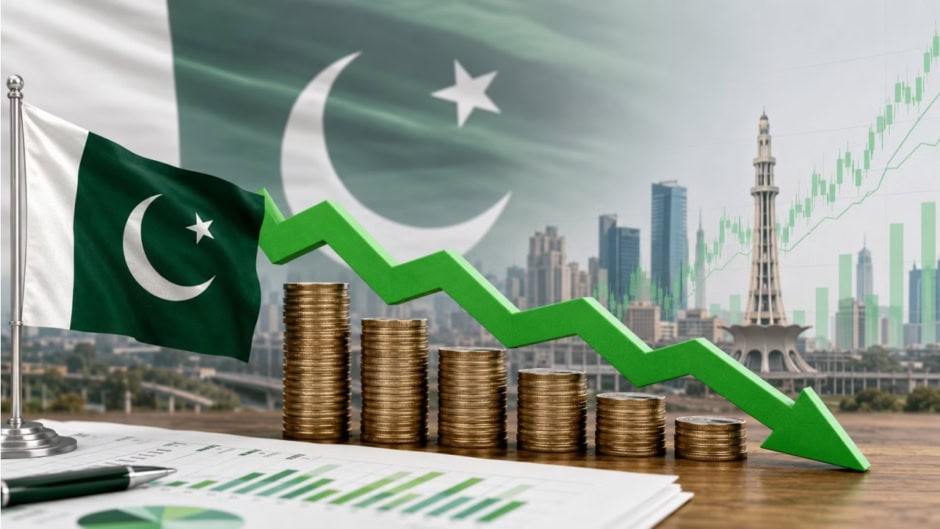
Pakistan recorded its lowest fiscal deficit as a percentage of GDP in history during FY2025-26, with the budget deficit falling to Rs. 3.3 trillion, equivalent to 2.6% of GDP.
According to fiscal data for FY26, the deficit declined significantly from Rs. 6.2 trillion, or 5.4% of GDP, in FY25. Arif Habib Limited said the latest figure represents the lowest fiscal deficit since FY18 and the lowest ratio recorded in the country’s history.
The improvement was mainly driven by lower government spending, particularly interest payments, along with stronger revenue growth.
Total government expenditure declined by around 4% year-on-year during FY26, while interest expenses fell by 22% as lower interest rates and improved debt management reduced the government’s financing costs.
The average yield on Treasury bills stood at approximately 11.03% in FY26, compared with 13.63% in FY25.
Excluding interest payments, government expenditure increased by around 5.6%, remaining below the approximately 10% growth recorded in total government revenues.
Pakistan also posted a primary surplus of Rs. 3.6 trillion, or 2.9% of GDP, during FY26, compared with Rs. 2.7 trillion, or 2.4% of GDP, a year earlier. The primary surplus exceeded the IMF target of 2.5% of GDP for FY26.
During the fourth quarter of FY26, the fiscal deficit stood at 1.9% of GDP, down from 2.8% in the same quarter of FY25. The primary deficit also narrowed to 0.4% of GDP from 0.7%.
Interest payments during the fourth quarter amounted to approximately Rs. 2 trillion, representing an 18% year-on-year decline despite an increase in domestic debt. However, interest costs rose 44% compared with the previous quarter.
Government spending on subsidies and grants also declined substantially, falling 29% year-on-year to around Rs. 1 trillion during FY26.
The fiscal gap was financed through a combination of domestic and external sources. Banks provided approximately Rs. 2.2 trillion in domestic financing, while non-bank financing recorded a net retirement of around Rs. 99 billion.
Privatization proceeds contributed approximately Rs. 4 billion, while external financing increased by around Rs. 1.2 trillion during the year.
Despite the significant improvement in FY26, fiscal pressures are expected to persist in the coming year. The fiscal deficit is projected to widen to around 3.6% of GDP in FY27, while the primary surplus is expected to moderate to approximately 2% of GDP.