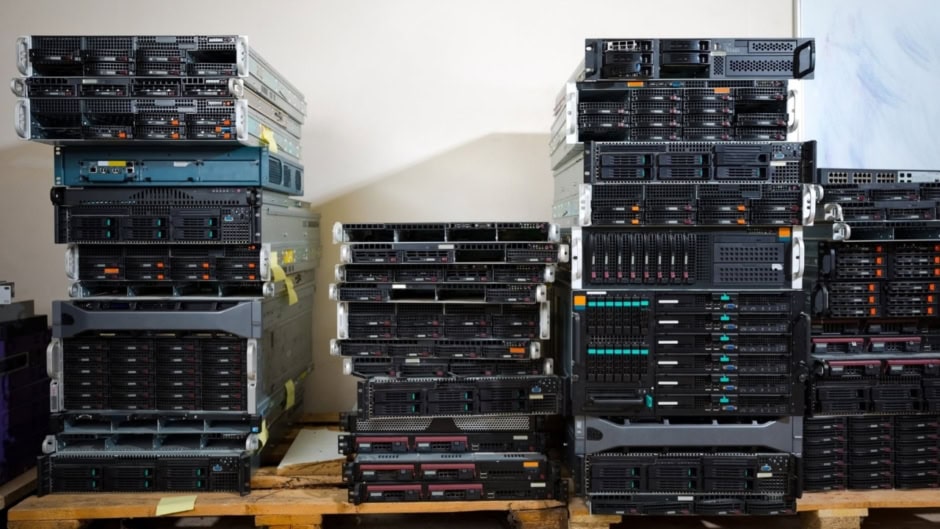
Old computers, hard drives, servers, and industrial electronics sitting in warehouses and landfills worldwide contain some of the most strategically valuable metals on the planet. Ohio-based startup Paladin Envirotech is building a national infrastructure to recover those metals before they leave domestic supply chains permanently.
The company focuses on rare earth elements, a group of 17 metals essential for AI hardware, electric vehicle motors, wind turbines, high-performance defense systems, and next-generation computing. Neodymium, dysprosium, praseodymium, and terbium sit at the core of high-strength permanent magnets that power everything from EV drivetrains to military radar systems. Current global supply of these elements depends heavily on China, which controls roughly 85% of rare earth processing capacity and has demonstrated willingness to restrict exports as a geopolitical lever.
Paladin’s recovery process uses patented acid-free dissolution technology developed in partnership with researchers at the Critical Minerals Institute, the US Department of Energy’s Ames National Laboratory, and the Iowa State University Research Foundation. The acid-free approach addresses a key limitation of conventional rare earth recycling, which often relies on harsh chemical solvents that create secondary waste streams and limit scalability.
The company recently opened a 93,000-square-foot facility in Phoenix, Arizona, adding processing capacity serving Arizona, Nevada, Southern California, and New Mexico. Together with sites in three other states, Paladin runs a hub-and-satellite model that collects retired electronics closer to where organizations retire them rather than requiring long-distance shipping to a single centralized plant.
Chief Operating Officer Bill Vasquez framed the strategy around closing a known gap.
“Across industry and government, there’s a growing focus on building resilient, onshore infrastructure — and that starts with solving for the last mile of e-waste, where too much material still leaks out of the system,” he said.
The company frames each retired device not as waste but as a domestic strategic resource, a concept researchers call urban mining.