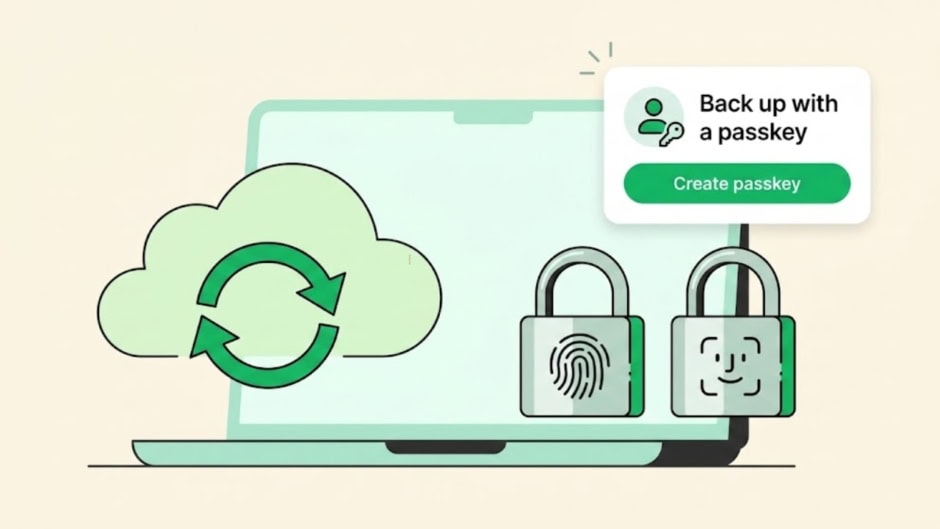
WhatsApp rolled out enhanced account security features on August 25, 2026, introducing multiple passkey support and stronger two-step verification passwords. Since the platform aims to make account takeovers significantly harder, these updates target both authentication methods and scam call prevention simultaneously.
WhatsApp first introduced passkeys in 2023, and more than one billion users have since created one, according to the company. Because passkeys provide an extra security layer for account access and backups, this feature already represents widespread adoption across the platform’s global user base. Users can now add more than one passkey to a single account across both Android and iOS devices, giving people additional flexibility when managing authentication across multiple devices.
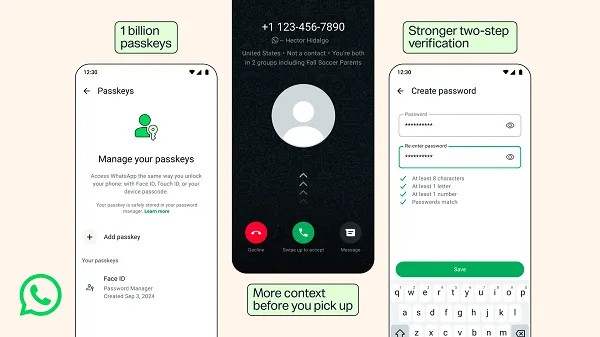
Beyond passkey expansion, WhatsApp is rolling out longer alphanumeric codes for two-step verification, replacing the previous six-digit PIN system entirely. WhatsApp explained that two-step verification serves as an extra protection layer preventing account takeovers even when someone obtains a user’s one-time passcode. Since the system previously relied on six-digit PINs, the company upgraded it to a full password featuring longer, alphanumeric characters and special symbols, making passwords considerably harder to guess.
As WhatsApp explains:
Two-step verification is an extra protection layer that helps prevent someone from taking over your account, even if they get hold of your one-time passcode. Until now it was a six-digit PIN, we’ve now upgraded it to a full password: longer, alphanumeric, and even with special ch@racters to make it harder to guess. If you’ve been using ‘123456,’ this is your sign to upgrade.
On Android, you’ll now see more information about a non-contact caller, like whether the number is from a different country and if you have any groups in common.
WhatsApp specifically called out weak security practices, stating that anyone still using “123456” should treat this update as their sign to upgrade immediately. Because the added complexity dramatically expands possible password combinations, external attackers face substantially higher barriers when attempting unauthorized account access.
Security and privacy remain central priorities for WhatsApp, which has become an increasingly essential tool for private messaging across diverse global contexts. Since the platform serves such varied use cases, from personal conversations to business communications, these layered security updates provide meaningful reassurance for users managing sensitive information through the app. The combined passkey and verification improvements represent WhatsApp’s broader strategy toward comprehensive account protection heading into 2027.