In alignment with Prime Minister Shehbaz Sharif’s “Digital Pakistan” vision and directives, the National Information Technology Board (NITB) has assumed full control of Pakistan’s Hajj operations’ digitalization. Under this initiative, Pakistan and Saudi Arabia have resolved to establish a historic, world-class “Digital Corridor.”
Confirming this landmark development from Makkah, Muhammad Awais, Program Manager at NITB (an agency operating under the Ministry of IT & Telecom), stated that the revolutionary digital corridor will facilitate the real-time sharing of pilgrims’ data with Saudi Arabia’s central Hajj systems, including the Nusuk and Mashaer platforms.
The integration aims to optimize Pakistan’s Hajj operations through cutting-edge technology, offering unprecedented convenience to pilgrims. Simultaneously, it will forge a robust and interconnected domestic network among key stakeholders, including NADRA, the Directorate General of Immigration & Passports, designated banks, and airlines.
“On the directives of the Prime Minister, an NITB team is currently stationed in Saudi Arabia as observers,” said Muhammad Awais. He added that under the guidance of Federal Minister for IT & Telecom Shaza Fatima Khawaja and Secretary IT Zarrar Hasham Khan, the project is being executed under the leadership of CEO NITB Faisal Iqbal Rattiyal to modernize all existing Hajj operational procedures.
As part of this digital transformation, a comprehensive monitoring framework named the Khuddam-ul-Hujjaj Performance Management System (KPMS) has been made operational. Comprising advanced mobile applications and centralized dashboards, KPMS enables live tracking of Hajj welfare staff (Khuddam-ul-Hujjaj), seasonal duty staff (SDS), and local assistants operating across Makkah, Madinah, Jeddah, and Madinah Airport. The system also features a mechanism to gather instant feedback from pilgrims.
In accordance with the Federal Cabinet-approved Hajj Policy and the Prime Minister’s project guidelines, technical assessments and capacity-building measures will be streamlined during Hajj 2026. This will pave the way for a complete transition of both government and private Hajj schemes to this centralized digital module by next year (Hajj 2027).
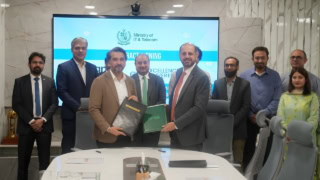
To ensure the execution of this long-term strategy, a formal five-year strategic agreement has been signed by Mohammad Bakhsh Sangi, Joint Secretary (Hajj) of the Ministry of Religious Affairs, and Dr. Khalid Rafique, Director General of NITB.