
Meta shifted its entire strategic focus from the metaverse toward artificial intelligence at Connect 2026, unveiling personal AI agents, redesigned smart glasses, and dramatically lighter virtual reality hardware. CEO Mark Zuckerberg told attendees that recent AI advances forced the company to rethink its approach to wearable technology fundamentally.
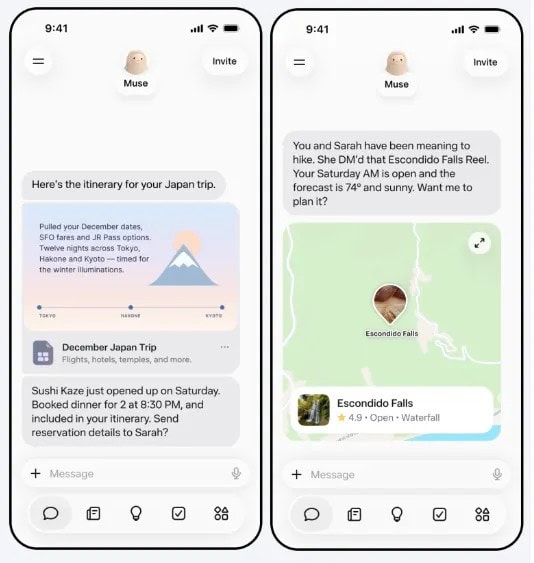
Muse stands as Meta’s centerpiece for this new era. The personal AI agent handles email composition, form-filling, shopping, and task delegation while Meta controls data through Secure VM encryption. Critically, Meta staff cannot access user information even when processing requests, establishing privacy controls above standard industry practice. The agent now integrates with major partners including Walmart, Best Buy, Gap, Sephora, Expedia, Instacart, and Wayfair.
Ray Ban Meta Gen 3 glasses introduce slimmed-down frames with extended battery life compared to previous generations. The new frames feature Dolby Atmos spatial audio capture alongside fresh capture modes and color options. According to Tom’s Guide reporting, an audio-only variant called Luna targets users concerned about camera-based recording entirely.
However, Zuckerberg’s privacy announcements arrive against a backdrop of legitimate user backlash. Previous Ray Ban Meta models faced intense scrutiny over unauthorized recording capabilities and staff viewing of captured content. Users discovered that disabling the camera recording light created privacy vulnerabilities, prompting Meta to push security updates that disable recording if the LED indicator becomes compromised. The audio-only Luna glasses emerged partly in response to these documented concerns, offering Muse access without video capture entirely.
Privacy advocates remain skeptical despite Meta’s expanded protections. The company’s decision to highlight private processing and camera-free alternatives suggests previous models did enable surreptitious recording and internal access issues that regulators and consumers found unacceptable. Meta’s pivot toward audio-only devices and explicit privacy guarantees effectively acknowledges that earlier smart glasses designs created genuine safety risks for people around wearers who might not consent to being recorded.
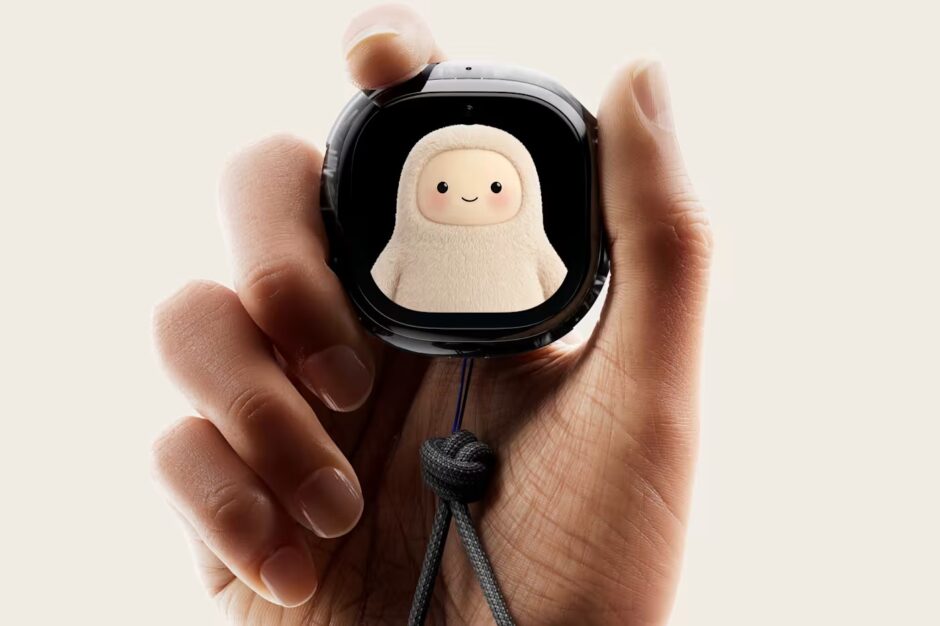
Zuckerberg also previewed the Muse Charm, a Tamagotchi-like device providing constant access to personal AI agents in a form factor that differs from standard glasses. Additionally, Ray Ban Meta continues expanding through limited partnerships, including custom frames inspired by K-Pop star Lisa’s aesthetic preferences.
Meta’s next-generation VR device represents the most dramatic hardware evolution. Weighing five times less than the current Meta Quest headset, the device uses a tethered architecture where optical cables connect the display unit to a separate pocket-sized compute pack. This configuration dramatically reduces facial weight while maintaining processing power through dedicated compute modules. The new headset integrates Muse AI naturally through conversational voice commands, simplifying navigation across multiple applications simultaneously.
Pricing sits at $1,299 (PKR 3.6 lac), with shipments beginning spring 2027. The device promises cinema-quality viewing experiences, virtual computing environments, and advanced gaming capabilities unified within one system.