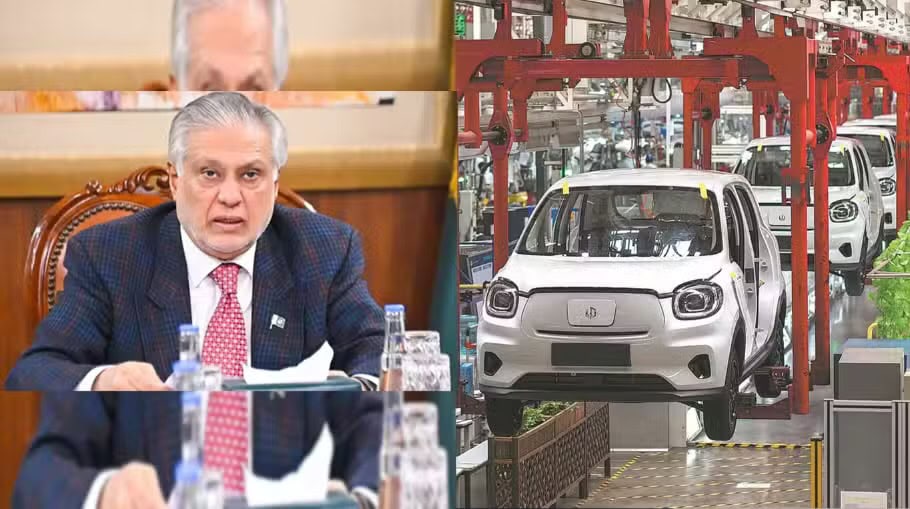
An Ishaq Dar-led steering committee has reached a consensus on Pakistan’s Auto Policy 2026–31, clearing a major hurdle in the formulation of the country’s new automobile sector framework.
Officials involved in the policymaking process said the committee has finalized the policy after considering concerns and recommendations from relevant stakeholders.
The finalized proposal will now be shared with the Ministry of Industries and Production, which will review and process it before forwarding it to the federal cabinet along with the committee’s recommendations for final approval.
The new auto policy has faced several delays following disagreements between the government and local automobile manufacturers over key areas including electric vehicles (EVs), hybrid vehicles, taxation and localization.
The policy aims to promote electric and hybrid vehicles, strengthen local manufacturing, encourage technology transfer and reduce Pakistan’s dependence on imported petroleum products.
The previous Auto Industry Development and Export Policy 2021–26 expired on June 30, 2026. Following its expiry, the previous tax concession for hybrid vehicles was withdrawn. From July 1, the sales tax on hybrid electric vehicles (HEVs) and plug-in hybrids increased from 8.5% to 25%, contributing to higher vehicle prices.
Uncertainty surrounding the new policy has also affected the automobile market, with some manufacturers reportedly delaying vehicle deliveries.
Local automakers had previously expressed reservations about the proposed EV-focused framework and called for temporary support for hybrid vehicles. Industry representatives generally supported the transition toward electric mobility but advocated a phased approach centered on localization.
Stakeholders also warned that excessive incentives for EVs without a clear transition strategy could lead to increased imports of completely built vehicles.
The proposed policy will now move to the federal cabinet, where key issues including taxation, EV incentives, treatment of hybrid vehicles, localization targets and the pace of Pakistan’s transition toward electric mobility will remain under consideration.