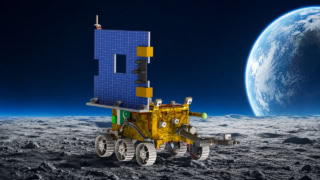
Google has launched a refrigerator-sized satellite carrying four Tensor Processing Units (TPUs) to test artificial intelligence computing in space under its Project Suncatcher research initiative.
The satellite will run a version of Google’s Gemma AI model for around 15 minutes at a time due to heat limitations. The mission will test how the chips withstand launch stress, radiation and extreme temperatures in orbit. Developed in partnership with satellite company Planet, the prototype was launched aboard a SpaceX rocket and is expected to operate for about a year.
Google plans to develop clusters of solar-powered satellites that could function as orbital data centers. Future satellites may carry dozens of TPUs and communicate with one another and Earth using laser links. The company plans to launch two additional satellites next year to test these connections.
However, significant challenges remain, including heat management, expensive launches and difficulties repairing equipment in space. Google says space-based data centers are unlikely to become cheaper than terrestrial facilities within the next five years, describing Project Suncatcher as a long-term research initiative rather than an immediate replacement for Earth-based data centers.