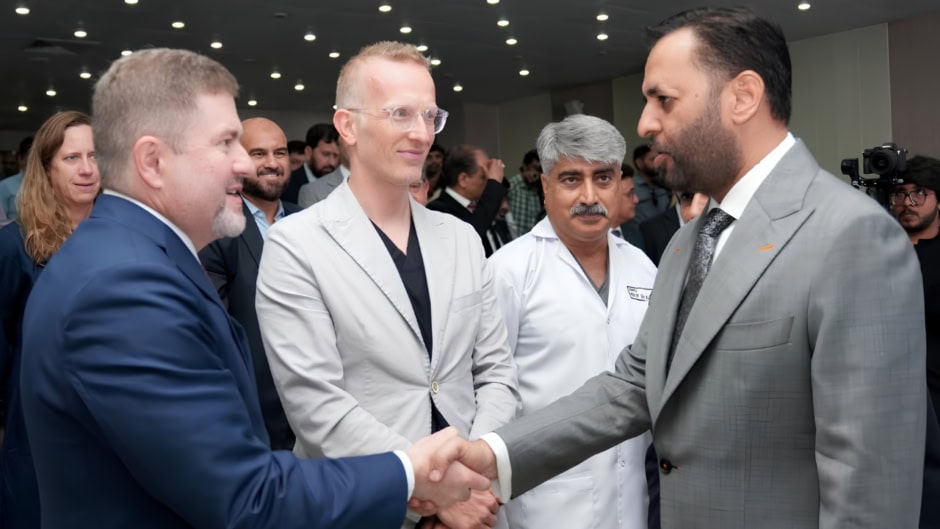
Pakistan recently reached a major medical technology milestone. Federal Minister for National Health Services Syed Mustafa Kamal officially launched Pakistan’s first public-sector Pulsed Field Ablation (PFA) programme. He inaugurated this initiative at the Pakistan Institute of Medical Sciences (PIMS) in Islamabad. Furthermore, the minister opened Phase-I of the upgraded PIMS Cardiac Centre and introduced a Patient Facilitation Assistant Service in the Emergency Department.
How the Farapulse PFA Technology Works
The new programme utilizes the Farapulse Pulsed Field Ablation System. American innovator Boston Scientific developed this game-changing cardiac technology. Meanwhile, Ferozsons Laboratories Limited introduced the system locally through a U.S.-Pakistan partnership.
Unlike traditional radiofrequency or cryotherapy techniques, PFA uses ultra-fast electrical pulses. Consequently, it selectively destroys the abnormal heart muscle cells responsible for irregular rhythms. At the same time, it preserves the surrounding healthy tissue. Experts note that this pinpoint precision significantly lowers the risk of injury to the oesophagus, phrenic nerve, and pulmonary veins. As a result, patients experience safer procedures, shorter wait times, and faster recoveries.
Tackling Atrial Fibrillation in Pakistan
Atrial fibrillation (AF) remains the most common irregular heart rhythm worldwide. It frequently leads to severe complications like strokes and heart failure. Prof Brig Dr Azmat Hayat, Head of Cardiac Electrophysiology at PIMS, estimates that between three to five million Pakistanis currently live with this condition. Unfortunately, many remain undiagnosed until serious emergencies arise.
Now, Pakistan stands as the first country in the region to introduce PFA technology in the public sector. Dr. Hayat added that the system boasts success rates approaching 99 percent in appropriately selected patients.
During the launch, four patients successfully underwent the modern procedure. These included 61-year-old Taj Muhammad and 53-year-old Riaz Ahmad from Islamabad. Furthermore, 63-year-old Riaz Ahmad from Mirpur, Azad Jammu and Kashmir, and 28-year-old Ali Raza from Mardan also received the treatment.
PIMS & Healthcare Infrastructure Investments
The government constructed the state-of-the-art PIMS Cardiac Centre at a cost of PKR 7.2 billion. Additionally, they invested another PKR 900 million to upgrade the medical facility. PIMS Project Director Prof Dr Akhtar Bandesha confirmed that eligible heart patients will receive this advanced treatment completely free.
Currently, PIMS handles a massive healthcare burden. Minister Kamal stated that the hospital actively treats 7,000 to 9,000 patients daily. Overall, the daily footfall of patients and attendants reaches 30,000 to 40,000 people.
To combat this, the government is currently revitalizing 28 Basic Health Units (BHUs) across Islamabad. This strategy aims to strengthen primary healthcare and reduce the overwhelming pressure on tertiary hospitals. Kamal also emphasized the need for stronger local governments, better access to safe drinking water, and a greater focus on disease prevention.
The high-profile inauguration ceremony saw attendance from key medical and diplomatic figures. These included PIMS Executive Director Dr Rana Imran Sikandar, Cardiac Centre Director Prof Dr Fazle Aziz Mian, Ferozsons CEO Usman Khalid Waheed, the U.S. Chargé d’Affaires to Pakistan, and the U.S. Consul General in Karachi.