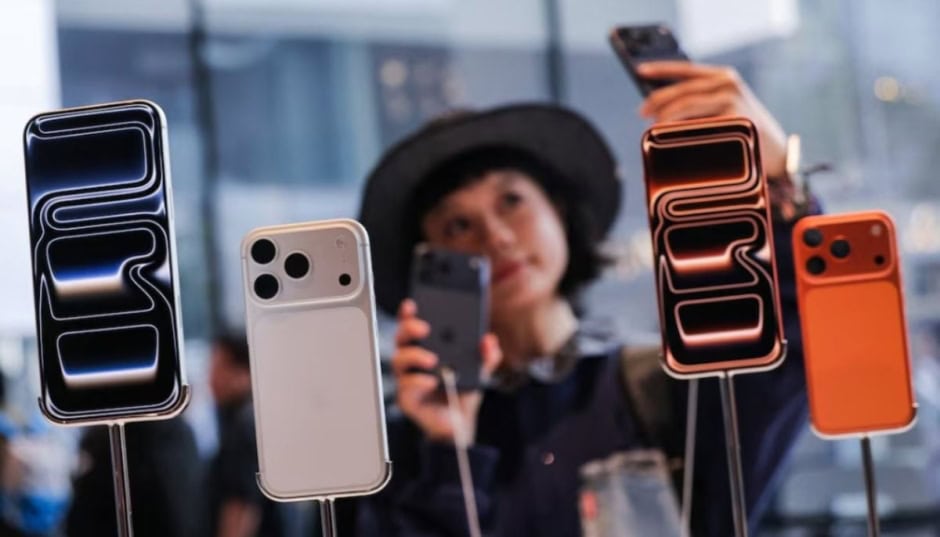
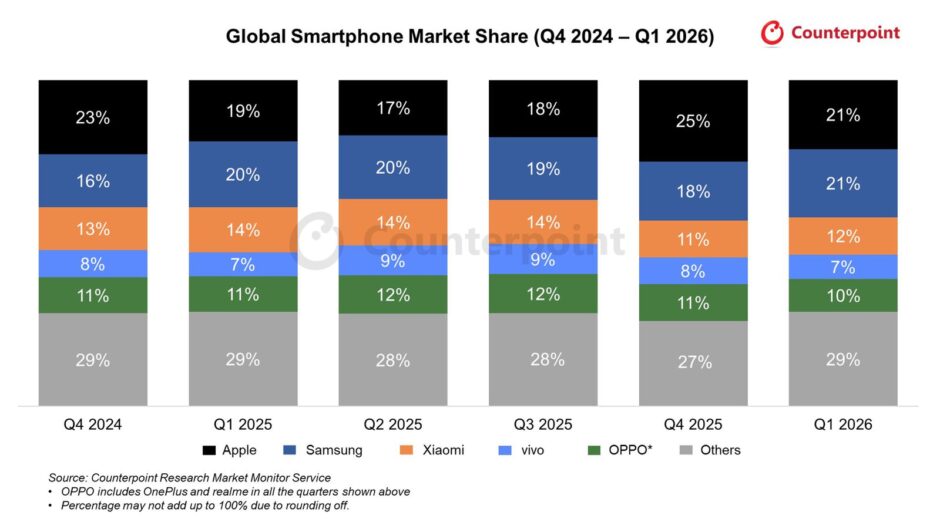
Apple claimed the top spot in the global smartphone market during the first quarter of 2026, according to fresh data from Counterpoint Research. This marks the first time the company has led worldwide smartphone shipments in the first quarter.
The report shows Apple secured 21 percent of global smartphone shipments in Q1 2026. The company also recorded 9 percent year-over-year growth, despite a 3 percent decline in the overall smartphone market.
Samsung followed closely with the same 21 percent market share. However, its shipments remained mostly flat compared to last year. Xiaomi ranked third with a 12 percent share, while OPPO and Vivo captured 10 percent and 7 percent, respectively.
At the same time, several Android brands faced sharp declines. Xiaomi’s shipments dropped 19 percent year-over-year. OPPO saw a 4 percent decline, while vivo slipped by 2 percent.
Apple’s strong quarter comes shortly after another major achievement for its latest iPhone lineup. Earlier, Counterpoint reported that the iPhone 17 became the world’s best-selling smartphone model during Q1 2026. In addition, the entire iPhone 17 series secured the top three spots in the firm’s Global Handset Model Sales Tracker.
During Apple’s earnings call on April 30, Tim Cook said the iPhone 17 lineup had become the company’s most successful smartphone family to date.
Counterpoint linked Apple’s performance to several factors beyond strong iPhone demand. The research firm highlighted Apple’s supply chain strategy and improving sales in China as key reasons behind the company’s growth. The report also noted that Apple handled industry-wide supply issues better than most rivals.
The global smartphone industry continues to struggle with shortages of DRAM and NAND memory chips. Chipmakers are currently giving priority to AI data center clients instead of smartphone brands. As a result, many manufacturers are facing rising production costs and supply pressure.
Cook previously warned that memory shortages could affect Apple more heavily later in 2026. Meanwhile, Counterpoint expects the chip supply crisis to continue impacting most smartphone brands throughout the year. The firm also believes the situation may last until late 2027.