The Southeast Asia smartphone market declined 15% year over year in the second quarter. The April to June period saw weaker shipments compared with the same period last year. According to Counterpoint Research (CR), rising smartphone costs are putting pressure on demand. Consumers are also becoming more careful with their spending as prices continue to rise.
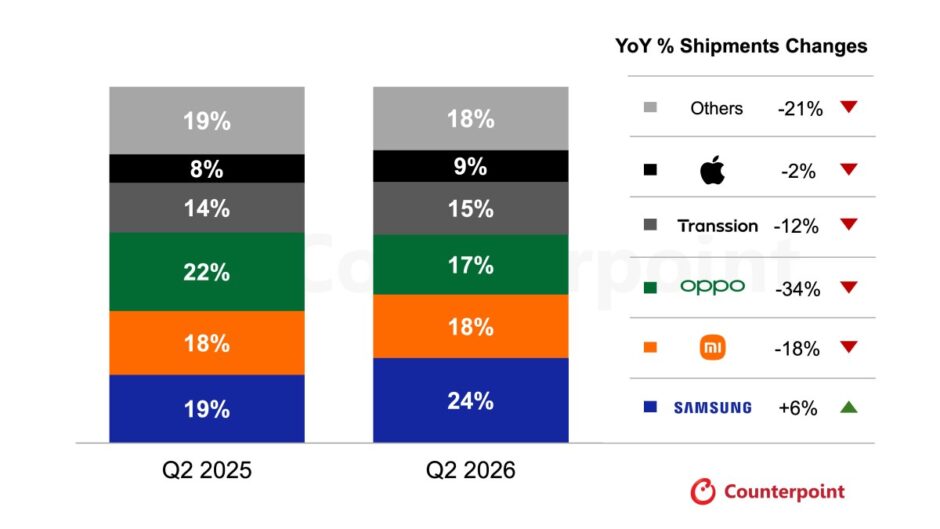
Samsung remained the market leader with a 24% share during the quarter. It was also the only major brand to increase shipments year over year, with growth of 6%. Xiaomi ranked second with an 18% market share, followed by Oppo at 17%. Transsion, which owns Infinix and Tecno, held 15%, while Apple captured 9%.
Samsung’s market share increased from 19% in 2025. Xiaomi’s share remained flat, while Oppo declined from 22%. Meanwhile, Transsion grew from 14% and Apple increased from 8%.
Lower-priced smartphones saw the biggest drop during the quarter. Shipments of devices priced below $150 fell 38% year over year, according to CR. The $250-$499 segment also declined, with shipments down 11%. However, more expensive phones performed much better during the same period.
Shipments in the $500-$699 segment jumped 74% year over year. The market for smartphones priced above $700 also grew, increasing 18%. The results point to a clear shift in consumer demand across Southeast Asia. Buyers are spending less on cheaper devices, while premium smartphones continue to gain ground.
CR expects smartphone makers to face continued pricing pressure during the second half of this year. Limited room for price cuts and cautious consumer spending could weigh further on shipments.